



Updated: Oct. 27, 2025
Originally Published: Feb. 3, 2025
At Northwoods, we’ve seen first-hand how powerful it is when organizations pursue brand strategy and user experience (UX) strategy together to inform and amplify each other. When this happens, your online experiences better resonate with visitors, build trust, and drive business growth.
If your teams still work on brand and UX strategy as separate initiatives, or if you’re looking for ways to make your marketing and digital efforts more impactful, this post is for you!
Here we dive into the value of combining both strategies, why they tend to be fragmented, and how bringing them together unlocks greater efficiency, consistency, and impact.
Setting the Stage: What Are Brand Strategy and UX Strategy?
Both brand strategy and UX strategy are essential to your overall marketing and digital success. But each addresses different pieces of the puzzle.
Brand strategy is often misunderstood as simply visual elements like logos, colors, and fonts. But these elements are just the visible final products, the outcomes of a larger brand strategy. A well-crafted brand strategy defines why your organization exists, who you serve, what makes you different from competitors, and how you want to be perceived in the market. It’s your organization’s guiding North Star.
Developing a brand strategy means conducting deep research – not just with customers but also with internal teams and other key stakeholders – to uncover current perceptions and identify ways to align your brand with your business goals. This research feeds essential elements such as brand essence, promise, personality, voice, and positioning. Once in place, your brand strategy provides the foundation for everything from marketing communications to visual identity.
UX strategy focuses on how people interact with your brand through digital touchpoints, primarily your website or app. It’s the process of understanding user behavior and needs through research like site analytics, heatmaps, user interviews, and usability testing. UX strategy sets the direction for creating digital experiences that are intuitive, accessible, and meet the real goals and expectations of your users.
While often associated with the design or interface of a website, true UX strategy goes much further. It is built on data and delivers recommendations that shape structure, navigation, content, and functionality. UX helps remove friction and ensures your brand promises are delivered through satisfying digital experiences.
Why Brand and UX Strategies Often Feel Worlds Apart
Given their shared focus on understanding customer and prospect needs and improving experiences, it’s somewhat surprising that brand and UX are typically handled as separate initiatives within organizations. But, when you examine them more closely, the reasons for the divide become clearer:
- Different triggers: Brand strategy often kicks off with big-picture events like leadership changes, mergers, rebranding efforts, or shifts in market positioning. UX projects revolve around digital metrics, such as declining engagement, usability problems, or new feature development.
- Different teams and budgets: Brand usually lives with marketing and leadership, often funded through marketing or corporate budgets. UX may belong to specialized teams in marketing, digital, IT, or customer experience groups with separate funding.
- Different leaders and stakeholders: Brand initiatives are typically led or championed by executives or senior marketing leaders, while UX work tends to stay within marketing, digital, or IT departments.
- Different scopes and outcomes: Brand strategy works at a broader market level, focusing on perception and positioning, while UX often zeroes in on optimizing specific web or app interactions.
Some organizations may hesitate to combine brand and UX for other common reasons like these:
- “Our brand team handles messaging; UX is too technical.”
- “Budgets and timelines don’t align.”
- “Our leadership doesn’t see the connection.”
Since both strategies aim to create better experiences and strengthen customer relationships, these differences create silos that can result in missed opportunities to merge insights or leverage combined efficiencies.
The Cost of Separation for Your Brand and Users
Handling brand and UX separately may seem standard, but it often comes at a price:
- Missed holistic insights: When brand and UX research are done in isolation, data and learnings often remain trapped in silos. Your teams miss the opportunity to view customer perceptions and digital behaviors through a combined lens. This results in incomplete understanding and less informed decision-making.
- Inconsistent experiences: If your brand messaging promises one thing but your website or app doesn’t deliver on that promise, customers notice. Fragmented strategies can lead to mismatched messaging and digital experiences that confuse or frustrate users.
- Wasted resources: Both brand and UX research involve significant investment of time and money. Conducting separate studies often means talking to the same customers twice, causing survey fatigue and increasing costs unnecessarily.
- Delayed impact: If brand strategy rolls out before UX improvements are made, or vice versa, the overall effect is muted. Changes fail to reinforce each other, and it’s hard to build momentum for business goals.
The Case for Integration: A Unified Brand + UX Strategy Process
At Northwoods, we recommend approaching brand and UX strategy as parts of one larger experience strategy. Here’s what that looks like:
- Start with joint research: Combine your brand and UX research efforts to uncover rich, holistic insights into customer needs, perceptions, behaviors, and pain points. Use surveys, interviews, focus groups, competitive analyses, and web analytics to feed both strategies.
- Build brand recommendations first: Use research findings to create clear brand positioning, messaging, and identity recommendations. This North Star guides all further work and ensures a consistent market-facing story.
- Follow with UX recommendations: Translate brand insights into practical UX guidance –content strategy, site architecture, interaction patterns, and design elements informed by user needs and brand goals.
- Collaborate on design and development: Use brand and UX recommendations side-by-side in design and development phases to create a unified website or digital platform. This ensures the visual look, messaging, and functionality align seamlessly.
- Launch and iterate with consistent metrics: Measure success holistically – not just traffic, but emotional connection, trust, usability, and brand perception – and use insights to continually refine your strategies.
Real-World Success Stories
Some of our favorite client collaborations illustrate exactly how a combined brand and UX strategy drives results:
- Supporting Brand Positioning: For Powerbrace, research showed their customers valued the team’s expertise and customer experience above all. Brand recommendations focused on elevating that message, and the UX team translated it into prominent team profiles and authentic imagery on the website. The site transformed from a product catalog into a trust-building showcase that set the client apart.

An example of a Team page from Powerbrace’s website, which was created to support the organization’s overall brand position of experience, elevating their service-oriented messaging.
- Brand Integration: Two separate companies owned by one parent organization needed to rebrand in preparation for a service launch into a new vertical. Branding research found the need to merge the brands into one for better alignment with customer needs and improved market penetration. UX followed with a reorganized website navigation and harmonized visual design to clearly communicate the new combined brand from day one.
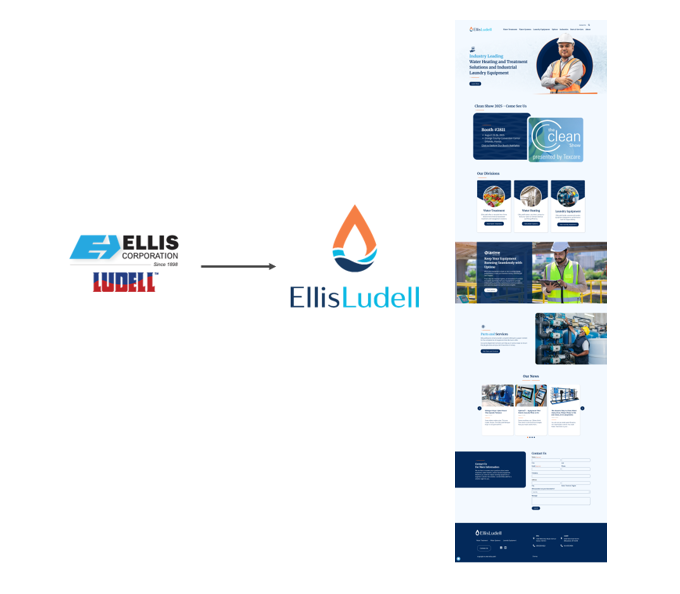
Northwoods identified the need to combine Ellis Corporation’s previously separate brands into one new brand. As a result, Northwoods’ UX team developed a unified website structure to support the new brand strategy. The unified approach of brand and UX strategy resulted in a cohesive, seamless customer experience across channels and touchpoints.
- Start-Up Innovation: A renewable energy startup needed to break through in a highly competitive and crowded market. Brand strategy emphasized innovation and forward-thinking values. UX ensured the website reflected that through a sleek, modern design, easy exploration of complex products, and educational content aligned with brand voice.

Northwoods’ brand and UX teams partnered with this renewable energy start-up to develop a bold new brand strategy and brand identity, resulting in a visually striking, user-friendly website that supported their innovative position and helped them stand out in a competitive industry.
To see these examples in action and dive deeper, view a replay of our recent webinar, The Hidden Power of a United Brand & UX Strategy.
Practical Tips to Get Started
If a unified brand and UX strategy isn’t yet a reality at your organization, here’s how to start moving the needle:
- Facilitate cross-team conversations: Bring brand, UX, marketing, and development leaders together regularly.
- Map current efforts: Identify overlapping research and opportunities to share insights.
- Pilot joint research: Start with one project or campaign where brand and UX research can align.
- Align goals and KPIs: Develop shared success metrics that reflect customer experience holistically.
- Educate stakeholders: Share examples and case studies showing how integration improves outcomes.
Overcome common objections with these key points:
- Both disciplines require strategic thinking and data-driven decisions. Collaboration enhances, not replaces, expertise.
- Even if you can’t undertake all UX and brand work at once, a phased approach still delivers value. Prioritize unified research first to inform brand and UX efforts down the line.
- Use data to make the case. Show how improvements in digital experience affect brand perception and business goals.
Final Thoughts
By combining UX and brand strategy, you’ll create efficiency through saved time and resources, build stronger and more consistent customer and prospect experiences across touchpoints, and create digital experiences that deliver measurable business results.
In a world where customers expect seamless, personalized, and consistent experiences, brand and UX can no longer remain separate islands. Today’s smart organizations view brand strategy and UX strategy as two sides of the same coin, each enriching the other.
If you need guidance on the best way to combine your brand and UX strategies, reach out! And download our The Value of Combining Brand & UX Strategy quick reference sheet or watch a reply of our recent webinar, The Hidden Power of a United Brand & UX Strategy.