



As we settle into 2026, digital marketers face a landscape that's both familiar and evolving. AI search tools continue to make headlines, click-through rates are shifting, and there's no shortage of hype about what's "dead" and what's "essential."
But here at Northwoods, we're nothing if not honest. So, let's cut through the noise and talk about what actually matters for your digital marketing strategy this year.
The Reality Check on AI Search
Let's address the elephant in the room: AI search.
Between ChatGPT, Gemini, and Google's AI Overviews, there's been plenty of speculation about traditional search dying. The reality? It's more nuanced than the hype suggests.
Google Still Dominates
Despite all the buzz, traditional search still wins. AI tool search accounts for less than 1% of total search traffic. It's grown since last year, but it's still a small piece of the puzzle. Google isn't going anywhere.
What has changed is how people interact with search results.
When AI Overviews appear on a search results page, organic click-through rates drop by roughly 50%. People are spending more time on Google itself, reading AI-generated summaries before deciding whether to visit a site.
This is what some call the "alligator effect" – impressions going up as your SEO improves but click-through rates declining because users are getting answers without clicking.
Have We Hit Peak AI Overview?
Interestingly, data from Moz suggests we may have already hit peak AI Overview saturation. After reaching a high point in early 2025, the percentage of queries showing AI Overviews has actually decreased. Google has stated that if users don't engage with an AI Overview for a particular query, they'll remove it over time.
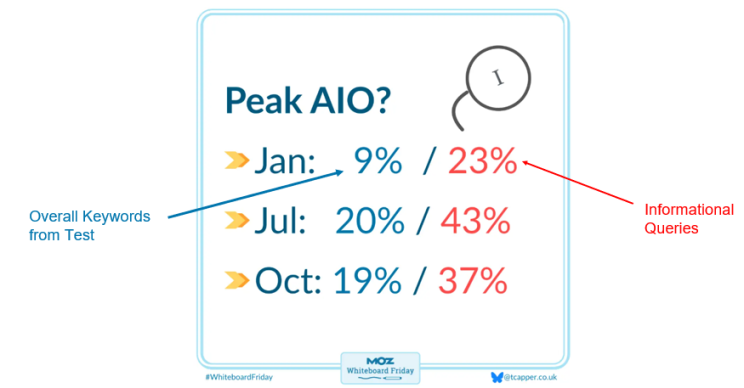
Source: Moz
This normalization could mean click-through rates improve slightly in 2026 for queries where users actually want to visit your site versus just grabbing quick information.
ChatGPT and Gemini Are Growing (But Slowly)
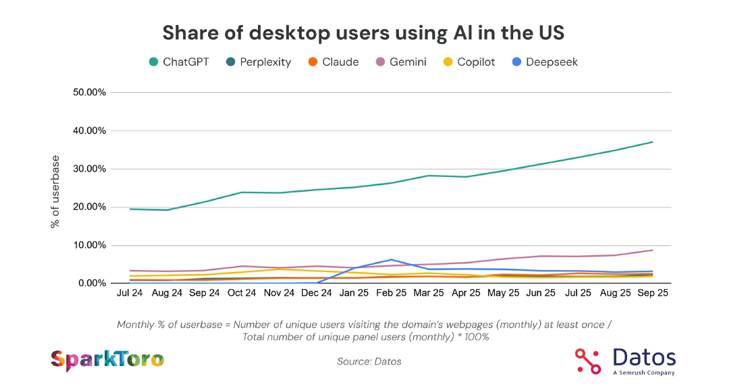
Among AI tools, ChatGPT and Gemini are the clear leaders, with Gemini gradually catching up. Other AI tools haven't seen significant growth. Importantly, the growth rate of these platforms is slowing down, suggesting we're reaching a point of market stabilization rather than explosive disruption.
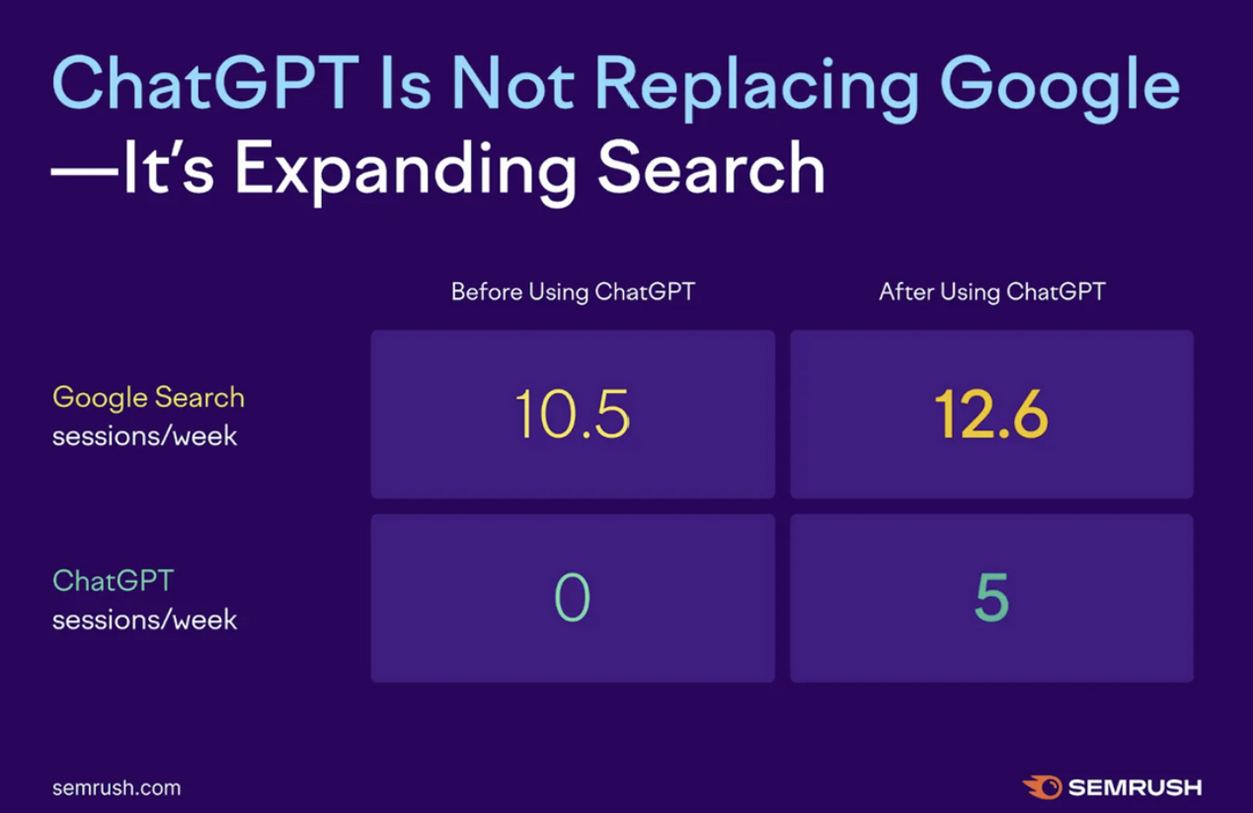
And here's something surprising: people using ChatGPT actually search Google more – about 12.6 times per week compared to 10.5 times for non-ChatGPT users. AI tools aren't replacing Google; they're becoming another stop in the user's research journey, much like social media platforms did years ago.
AI Visibility Metrics: Proceed with Caution
Tools like Peec and Semrush now offer "AI visibility" scores that claim to show how often you appear in AI search results. Leadership loves these simple metrics, but here's what you need to know: these tools don't actually have access to real user prompt data.
Instead, they repeatedly prompt AI tools with variations of queries and track whether your site appears. It's an estimate, not a measure of actual user behavior. Without knowing the specific prompts users are entering, these scores have limited strategic value.
AI visibility tools can be useful if you have a clear, specific prompt you want to rank for. But without that direction, they're essentially guessing based on your site's content. They're also often expensive. Use them cautiously and understand their limitations.
SEO Fundamentals Still Matter (A Lot)
Here's the good news: the fundamentals of good SEO haven't really changed, despite where you might be showing up.
Traditional Rankings Still Drive Results
Search engine results pages are crowded with AI Overviews, featured snippets, and ads. But that number one organic ranking? It still captures the majority of organic traffic.
Rankings matter for visibility in both traditional search and AI citations. In fact, AI tools and Google both reference organic search rankings when determining which sources to cite.
Higher-ranking pages also get more of Google's crawling bandwidth and attention, which means better indexing and understanding of your content. So fundamental SEO – optimizing for Google search – remains the most effective way to gain visibility across the internet.
Keywords Aren't Dead
Despite claims that AI is smart enough to understand content without explicit keywords, the data doesn't support this. Content with targeted key phrases consistently performs better for those specific searches.
Even AI tools with their sophisticated semantic understanding can make unexpected connections (like associating "shoes" with "horses" because of horseshoes).
Keywords give you control. They help direct both search engines and AI tools toward understanding exactly what your content addresses. Keep your keyword research, maintain your target spreadsheet, and continue including those phrases in headers, titles, and metadata.
Use the E-E-A-T Framework as Your Foundation
Google has consistently emphasized E-E-A-T (Experience, Expertise, Authoritativeness, Trustworthiness) as their key content assessment framework. This isn't new – it's been central to SEO since the mid-2010s. The only addition since then is "Experience" in 2022, which focuses on demonstrating human authorship.
-
Experience means showing you have firsthand knowledge of your topic. Create author profiles, name real people behind your content, and demonstrate consistent expertise in your subject area. Google wants to know there's a human expert generating your content, not AI-generated material.
-
Expertise is about comprehensive, in-depth content that answers user questions thoroughly. Write about adjacent topics to your main services to demonstrate broad knowledge in your field.
-
Authoritativeness involves both citing credible sources and being cited by others. Quality backlinks matter, as does your willingness to link to authoritative sources in your own content.
-
Trustworthiness means avoiding spammy tactics and misinformation. Focus on demonstrating the human element in your work and citing reliable sources.
-
And also, Freshness. Freshness is our addition to the framework. Google consistently favors sites that regularly update old content and add new original material.
Technical SEO Essentials
Make sure your site is fully crawlable by both search engines and AI tools. Pay special attention to:
-
Structured data markup: Use schema markup for articles, FAQs, recipes, and other content types. This helps both Google and AI tools understand your content.
-
JavaScript content: AI tools can't always crawl JavaScript-rendered content, so ensure critical information is accessible without it.
-
Mobile optimization and Core Web Vitals: Page speed, interactivity, and visual stability continue to impact rankings.
Smart Strategies for Paid Advertising in 2026
When it comes to paid ads, our advice is: be strategic, not reactive.
Approach AI Ads with Caution
Google has introduced AI Max (essentially a rebranded version of dynamic campaigns) and AI Mode with direct shopping offers. Perplexity and ChatGPT have announced or tested ad platforms. Our recommendation? Don't be an early adopter.
These platforms are bleeding money and rushing to monetize before they're ready. Early reviews of Perplexity ads have been poor. History shows that tech companies often push features forward before they work well. Let others test the waters, monitor the results, and jump in when these platforms demonstrate real ROI.
Instead, use your valuable budget dollars to expand in proven channels first. Test Performance Max if you haven't, explore YouTube ads, or optimize your existing search campaigns. When AI ad platforms mature and credible experts (not LinkedIn hype machines) confirm they're working, then make your move.
How to Actually Use AI in Your Ad Strategy
AI tools can be valuable for:
-
Brainstorming ad copy and headlines (but add your own touch)
-
Automated bidding strategies (with careful monitoring)
-
Continuous testing in responsive ads
The key word? Skepticism.
Don't let AI write everything for you. Everyone else is using the same tools, which means AI-generated content creates white noise. Stand out by adding your unique voice and message.
Expand and Optimize Your Google Ads
Google remains the king of search advertising. If you're using Google Ads, ask yourself:
-
What campaign types am I not testing? (Performance Max, YouTube, Display)
-
What keywords am I overlooking?
-
Are there new audience segments to target?
-
Am I advertising all my products, including smaller "long tail" offerings?
-
Is my account structure optimized for easy analysis?
-
Is my conversion tracking still working after recent site updates?
Sometimes campaigns underperform not because the keywords are wrong, but because messaging or landing pages need adjustment. Test different angles.
Know Where Your Audience Actually Is
Use tools like SparkToro to understand where your specific audience spends time online. While YouTube consistently ranks as the top social platform for most sites, the order of platforms varies significantly by industry and audience. You might discover your audience are heavy LinkedIn users or even use sites like Yahoo more than the general population (yes, that’s based on one of our client’s audiences!).
This data helps you make informed decisions about where to allocate advertising budget and what platforms deserve testing.
Final Thoughts
Make Time for Strategic Thinking
One of the most important things you can do this year? Carve out dedicated time for strategy, separate from tactical execution. We call it "think time."
Execution will happen – you'll create content, run ads, and generate reports. But without strategic thinking, you risk unfocused effort that doesn't drive toward your goals. Block time on your calendar specifically for analyzing whether you're on track, what needs to change, and how the landscape is shifting.
Thinking time is just as valuable as execution time. It leads to smarter execution down the road.
Start with Strategy, but Be Ready to Pivot
Think of your marketing goals like planning to summit a mountain. You wouldn't just start climbing without a plan. You need to know your destination and plot your route to get there.
A goal is your broad outcome – maybe you want to increase sales by 10% or boost qualified leads by 20% over the course of the year. That's your summit. But to reach it, you need objectives: those short, measurable steps that create your path forward. This might include improving SEO rankings, increasing AI visibility, or investing more strategically in paid ads.
Then you need to measure your progress. This is critical! Set up dashboards that help you understand whether you're achieving your objectives.
-
Are your key conversions up?
-
Is your organic traffic converting at a higher rate?
Maybe you'll discover that your conversion events need adjusting, or that you're getting high-quality traffic from unexpected sources. This data is critical to helping you determine whether to stay the course or pivot.
And it’s also important to be agile because, as we all know far too well, things change. Last year alone, Google rolled out core updates that shifted rankings and introduced AI overviews that altered click-through rates.
The strategy you set in January might need adjustments by March. That's not failure, that's just smart marketing.
Throughout 2026, successful digital marketing will require balancing innovation with fundamentals. AI search is real and growing, but traditional SEO still drives the majority of traffic and visibility. New ad platforms are emerging, but proven channels still deliver the best ROI for most businesses.
Set clear goals, measure what matters, stay agile when changes demand it, and resist the urge to chase every shiny new trend. Future-proof your strategy by building strong SEO foundations that work across all search modalities, but don't sacrifice performance in established channels for unproven opportunities.
Most importantly, maintain the human touch in everything you create. Whether it's content, ad copy, or strategic decisions, that human expertise and perspective is what will set you apart in an increasingly AI-saturated landscape.
Need help developing your 2026 digital marketing strategy? Our team combines deep expertise in SEO, paid advertising, and emerging AI search technologies. Reach out to schedule a complimentary consultation and learn how we can help you navigate this evolving landscape.